SEO Monitoring for Job Boards
Know when something breaks. Know which issue matters. Know how to fix it — before the traffic loss compounds.
The Problem
Technical SEO issues hit job boards harder than almost any other site category. Job boards share the same core content patterns — job listings and category pages are rarely unique and often utilize the same structured data, which means the same technical issues recur across the sector and have an outsized impact on rankings. A schema issue, a rendering change, an indexing API misconfiguration, a sitemap that silently stops updating: any one of these can cost you 20–50% of organic traffic within weeks.
Three things make this worse:
- Ignoring issues compounds the damage. Lost rankings during a technical regression don't just snap back when you fix the issue. Google has to re-crawl, re-evaluate, and rebuild trust in the affected pages. Recovery routinely takes 3–6 months — sometimes longer.
- Google rarely tells you what's actually wrong. Search Console flags symptoms ("Soft 404", "Discovered – currently not indexed", "Duplicate, Google chose a different canonical") without explaining the root cause. For job boards specifically, the root cause is almost always something Google's generic documentation doesn't cover and is highly specific to the business.
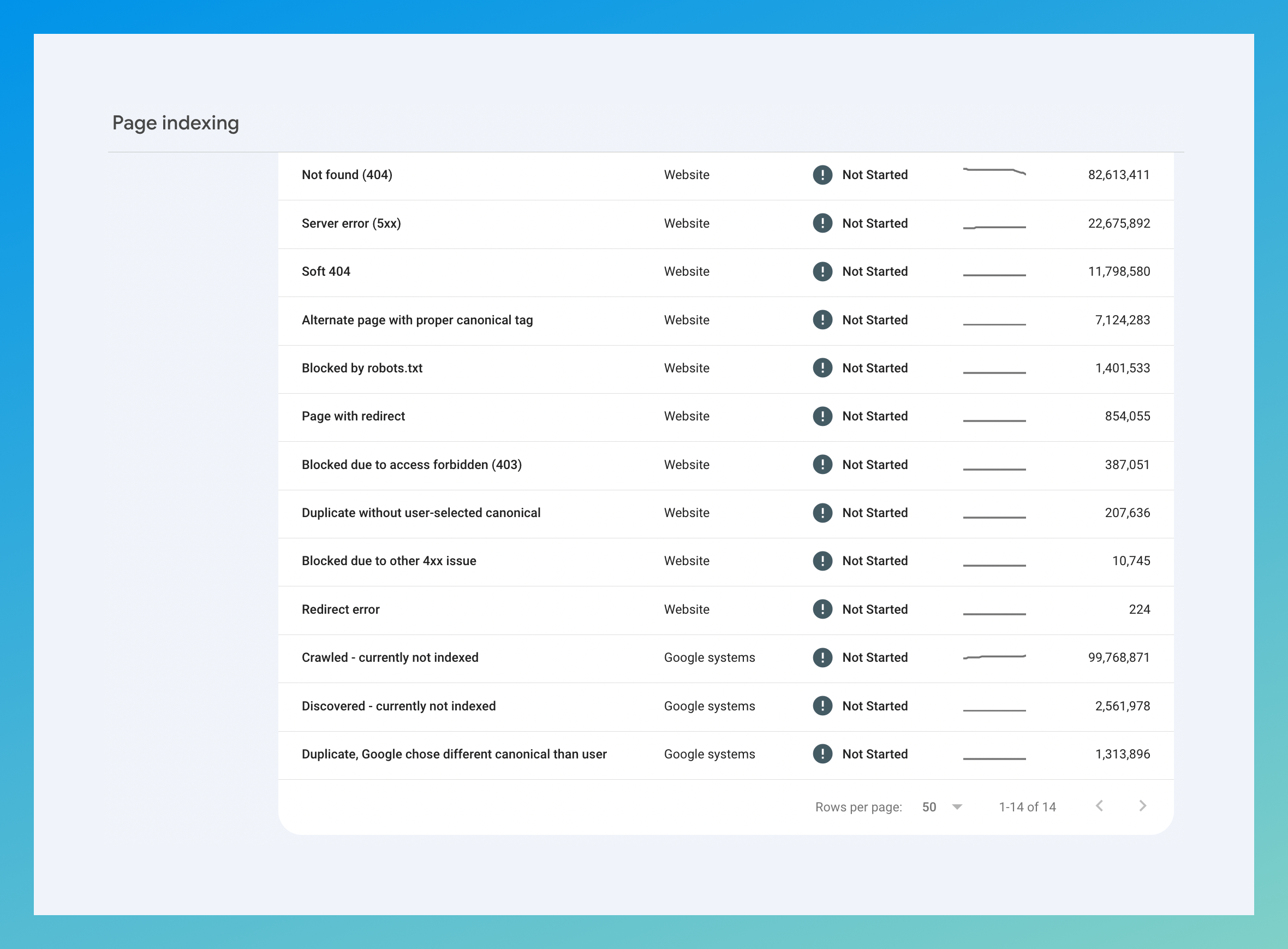
- You can't fix what you don't see in time. Most job board operators discover technical regressions weeks after they happened — usually when the traffic drop is visible in the dashboard. By then, you've already lost the window for cheap and quick recovery.
How I Work
I've built a monitoring methodology specifically for job boards, refined across 300+ properties. It's not generic SEO monitoring with a job-board marketing layer on top — it's built around the failure patterns that actually matter for marketplaces with high-volume, fast-changing content, which I have seen over the past 7 years.
Continuous Technical Monitoring. Daily checks across the issues that move the needle for job boards: indexing coverage on category and job detail pages, structured data validity (JobPosting schema, with the fields Google actually weights), rendering behavior on search pages, crawl budget allocation, sitemap freshness, redirect chains, and Core Web Vitals on the page types that matter — not the homepage.
Prioritization by Traffic Impact. Engineering capacity is finite. Not every flagged issue deserves a sprint. I score every issue against the pages it affects, the search demand on those pages, and the rate at which the problem is spreading. The output is a ranked list — what to fix this week, what to fix this quarter, and what to monitor but not touch.
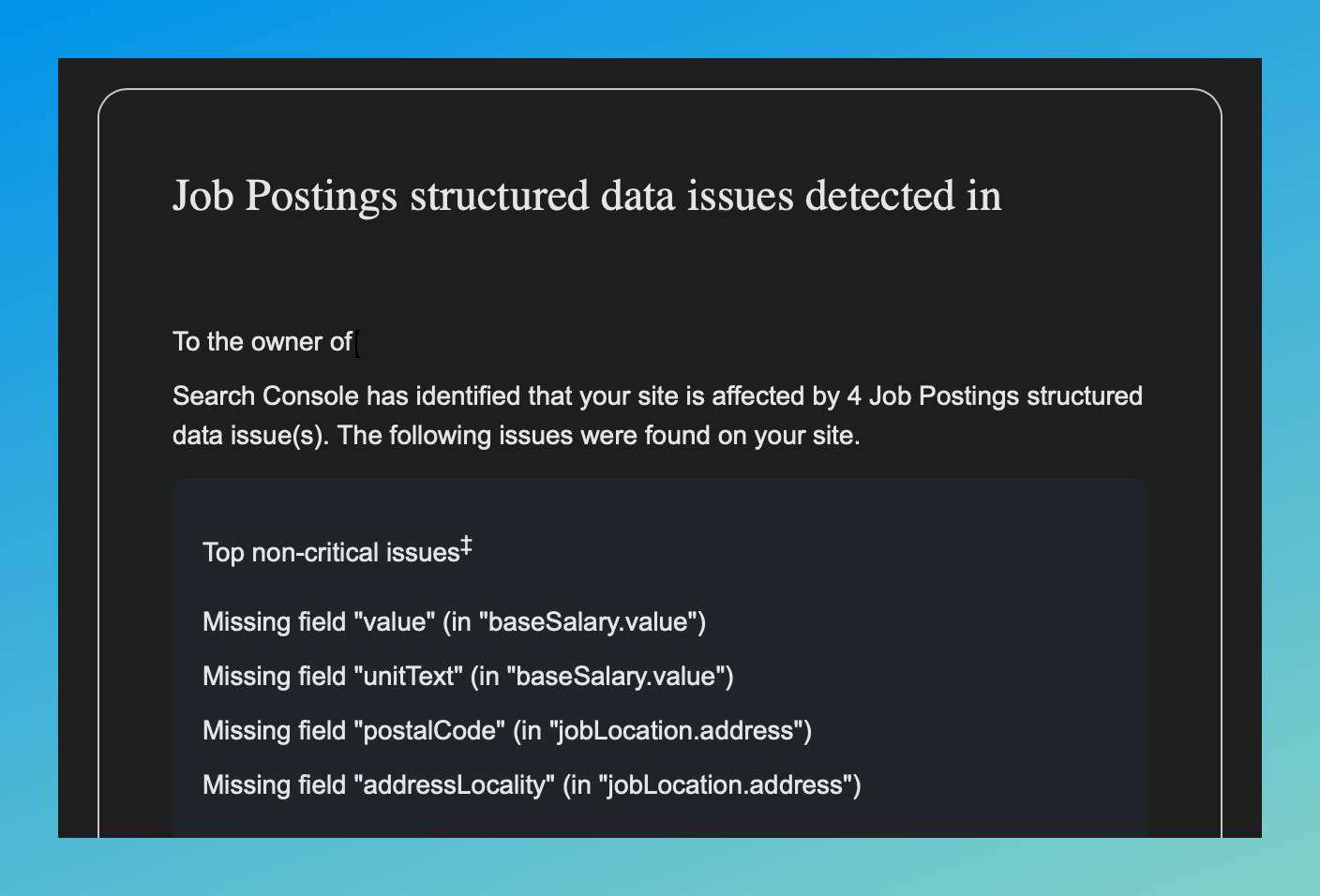
Job-Board-Specific Diagnosis. When something breaks, the fix usually requires understanding how a job board actually works: the lifecycle of a job posting, the relationship between feed ingestion and the job posting. The interaction between dynamic category pages and crawl schema, as well as the internal republishing logic, affects spam signals. Generic SEO advice gets these wrong. I diagnose the underlying mechanism and give your engineering team a concrete spec — not "improve your crawl budget" but a specific change for your specific system.
Alerting on the Things That Actually Matter. Daily noise gets filtered out. You'll only hear from me when something is materially affecting traffic or is on track to. The trade-off most monitoring tools get wrong — too many false alerts, real issues buried — is solved by knowing what job-board-specific signals look like in production.
What Is Covered
The monitoring covers but is not limited to:
- Job posting schema and other structured data
- Google Jobs indexing and general indexation health
- Expired jobs flow
- Faceted navigation
- Canonicalization of URLs
- Duplication
- Infrastructure issues
- Core Web Vitals and page speed
- Crawling issues
And over 50 additional KPIs specifically created for job boards.
Results
The monitoring methodology has been deployed across 300+ job boards spanning every major market and every site scale — from niche boards with 5K jobs to large aggregators with 10M+ listings. Clients include Talent.com, Career.io, JobsGoPublic, Reed.co.uk, and leading job board SaaS vendors including Jobiqo.
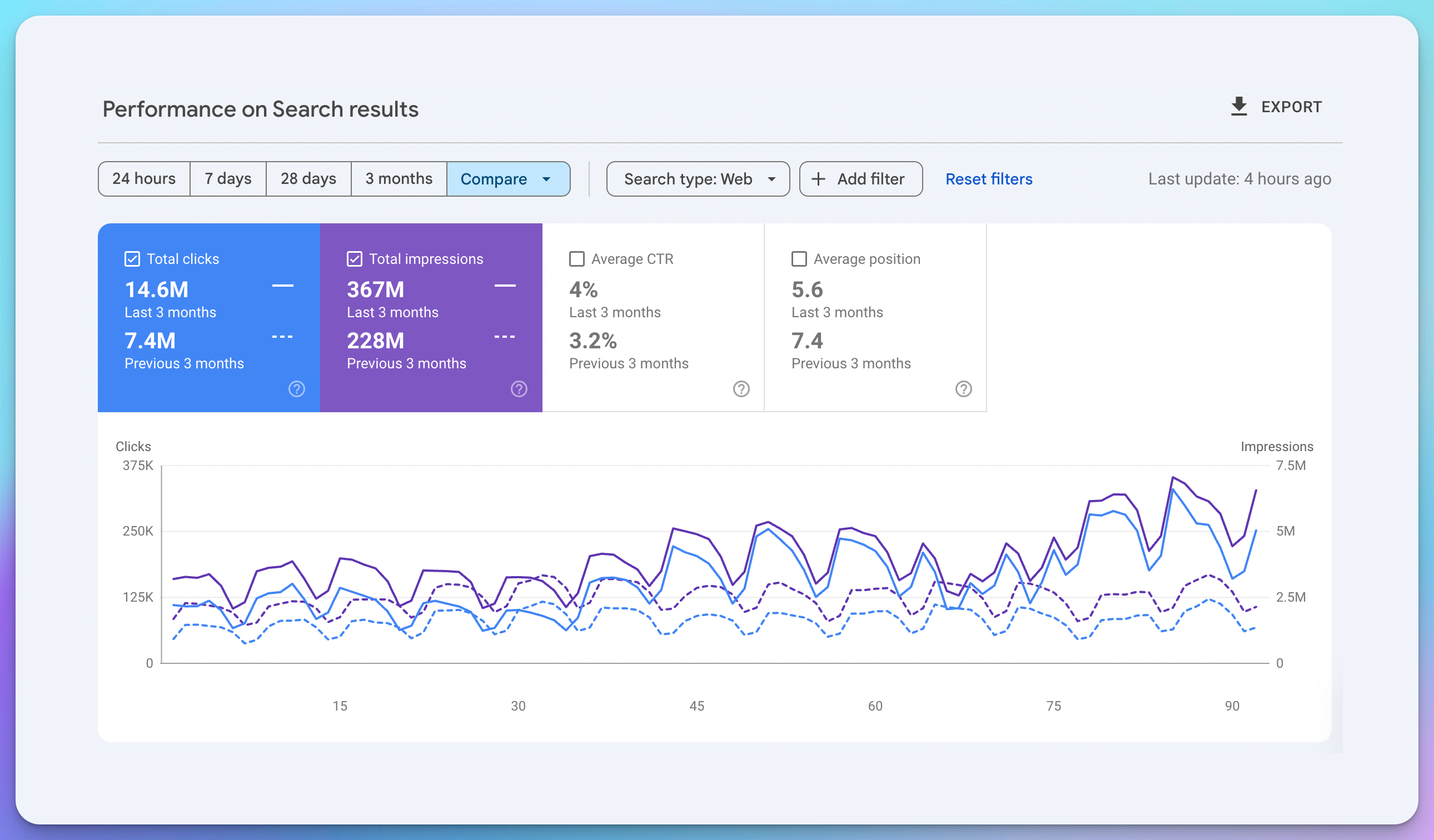
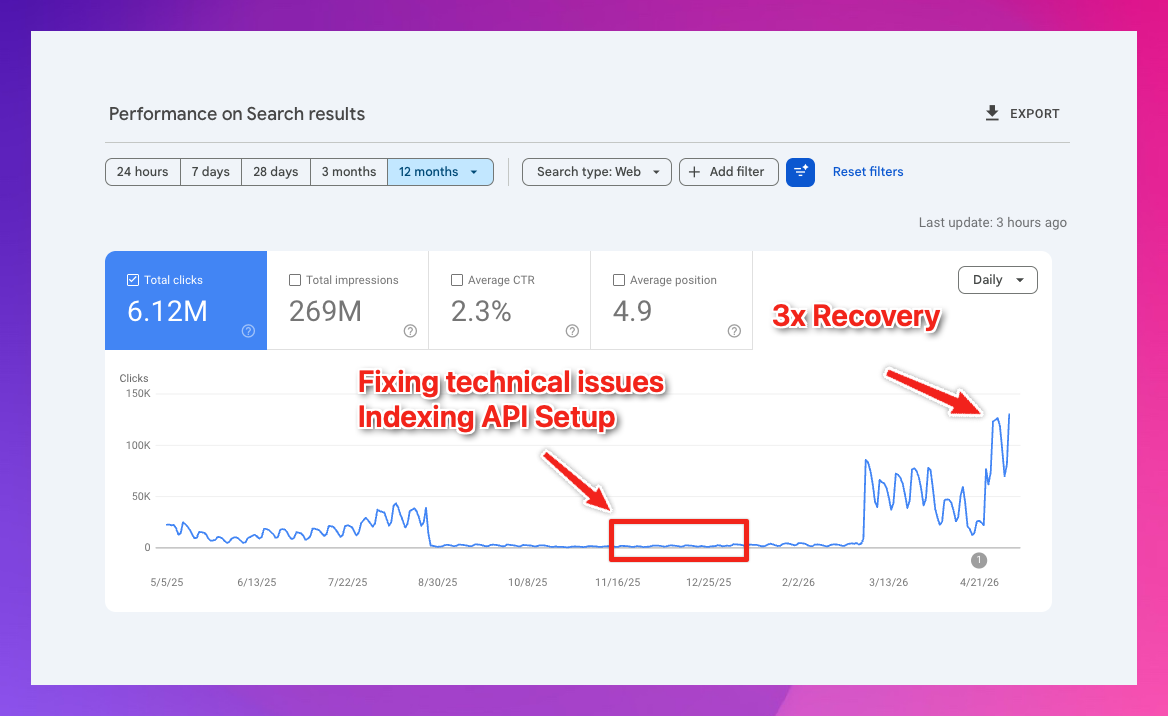
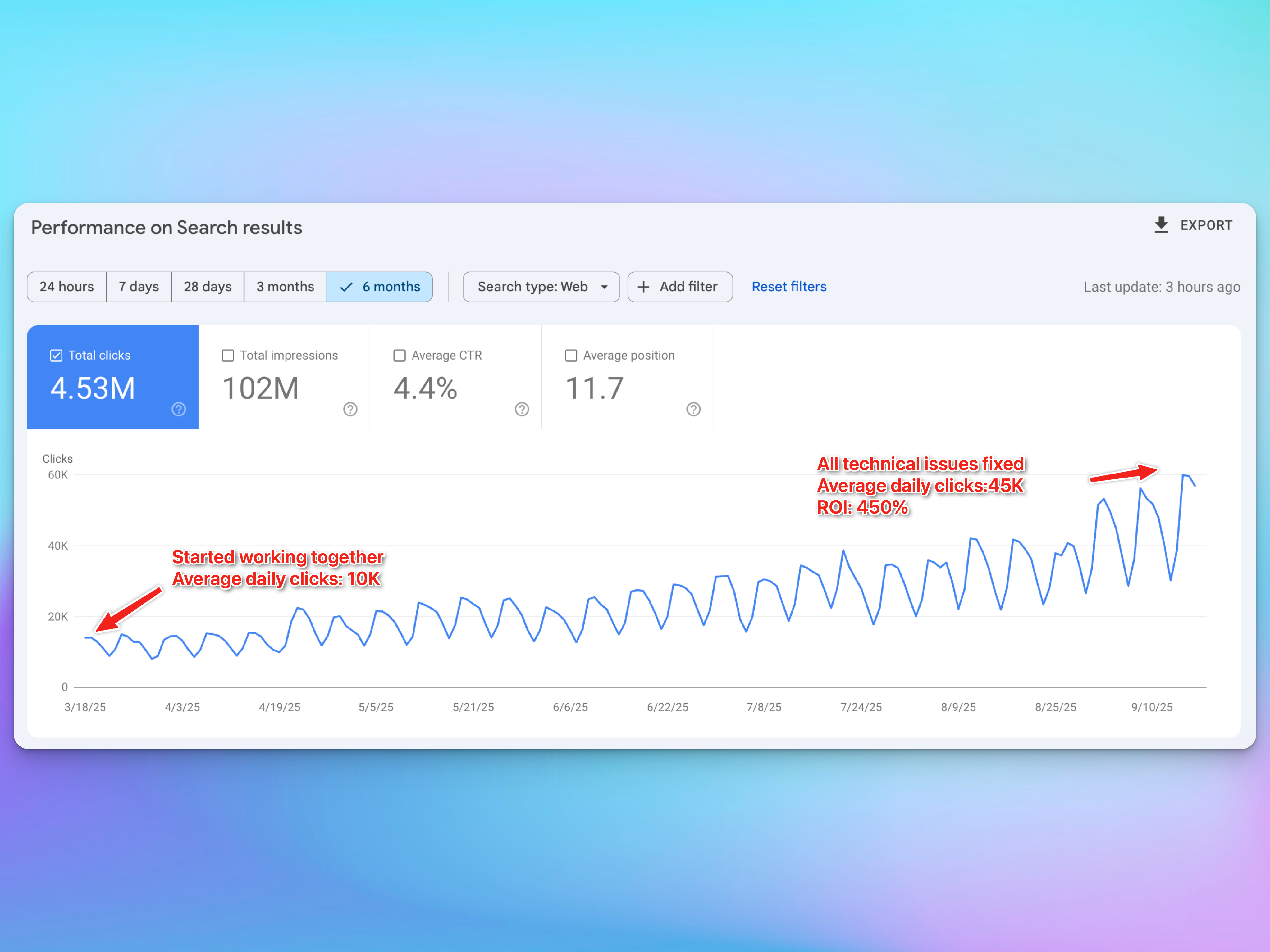
What clients consistently get from the engagement:
- Faster detection. Regressions caught within days, not weeks — before the traffic impact compounds.
- Engineering effort spent on the right problems. A prioritized backlog means no more wasted sprints on issues that don't move traffic.
- Job-board-specific fixes. Not "fix your soft 404s" — a concrete spec for the change your platform actually needs.
- Traffic preserved across migrations, redesigns, and platform updates. The highest-risk moments for a job board, monitored deliberately.
Why Generic SEO Monitoring Falls Short
SaaS SEO monitoring tools were built for content sites, e-commerce, and SaaS marketing pages. They flag the wrong things, miss the right things, and assume your stack looks like everyone else's. Job boards have a fundamentally different content profile: high page count, rapid turnover, structured data dependency, complex indexing lifecycles, and revenue tied directly to organic visibility on a narrow set of high-intent queries. Monitoring needs to be calibrated for that — by someone who's worked on the inside of these businesses.
Pricing
Monitoring is priced by site scale. Indexed pages are measured via Google Search Console's coverage report.
Starter
Up to 100,000 indexed pages
Growth
100K – 1M indexed pages
Enterprise
1M+ indexed pages, multi-market, or multi-domain
All tiers include: continuous technical monitoring, prioritized issue reports, job-board-specific fix specs, and direct access for engineering team questions. Month-to-month — cancel any time. Recommended commitment is 6 months: technical regressions and the recovery cycles that follow take time to surface, and the methodology compounds over the first two quarters.
Frequently Asked Questions
How is this different from running Semrush, Ahrefs, or Search Console alerts ourselves?
Do you just identify issues, or do you fix them?
What access do you need from us to set this up?
How long does it take until the first report is ready?
We already have an SEO agency / in-house SEO team — does this replace them or work alongside?
Get Started
Tell me about your site and I'll come back with a scoped proposal within two business days.